Hello, 2026
Je suis de retour
Hello, Substack, and welcome to your first VINOLOGY post of 2026.
It’s been a minute (17 months) since I’ve written. I wish I had some extravagantly wonderful reason to offer you as to why I’ve been absent - a luxurious wine sabbatical in the heart of Burgundy or recovering on a yacht from a Kris Jenner-style face lift (kidding) - but alas, I have none. Life simply became too busy.
That said, I’ve missed having an outlet to share my love of wine with others, and I’ve missed not having a space where I can write more creatively about a topic I’m passionate about.
I’ve committed to myself that in 2026, you will have one post from me every week, on Tuesdays. I’ve also given some thought to how I can switch up the type of content I deliver to you. Don’t get me wrong, I love a historic deep dive (it’s actually one of the things I find most fascinating about the world of wine) but these require much research, fact checking, time, and mental pithiness to distill it all down. Plus, not everything about wine has to be so serious and complex. It can also be amusing, lighthearted, and whimsical.
So to kick our New Year off, I present to you a semi-organized list of musings I’ve had about wine in recent weeks.
The awkward space between knowledge and application: Compared to the average person, I have a relatively deep knowledge of wine. But theoretical knowledge ≠ practical experience (unless you consider the act of simply drinking wine practical experience, then I also have a lot of that) and I often find myself wondering how I can elevate my ability to apply what I know in real-world scenarios. I can tell you what I think of a wine’s taste or structure, but I still hesitate to confidently use that information to assess the quality of an unfamiliar bottle. It’s a skill I’d love to refine.
Olfaction upskilling: This is another ability I’m keen to keep improving. I’ve gotten much better over the past year, but like most skills built through practice, consistency is king. My goal is simple (albeit maybe a bit odd): I’d like to get to the point where I can identify aromas while sitting in a restaurant or lounge, basically the equivalent of parallel parking with the radio up. Can I pick out aromas? Yes. Do I require absolute silence and zero distractions to do so? Also yes.
Parlez-vous Français?: If my internet bill had a cost-per-use breakdown, the number of times I’ve looked up the proper pronunciation of various French wine terms would have pushed it well into les négatifs.
Intrusive thoughts about my wine collection: I live in a condo building, so my wine “cellar” is actually a closet (yes, it’s temperature controlled. Yes, it’s dark. No, there are no vibrations). My Closet Wines™️ are special, and I look forward to drinking them one day. Despite the fact that they’ve been stored properly, I experience regular intrusive thoughts about opening a bottle that I’ve been waiting to cherish only to find it’s past its drink window and has turned to vinegar. In the worst of my nightmares, the liquid has somehow turned to dust.
My (new) fight against acid reflux: Tums topped my December ‘must-buy’ list.
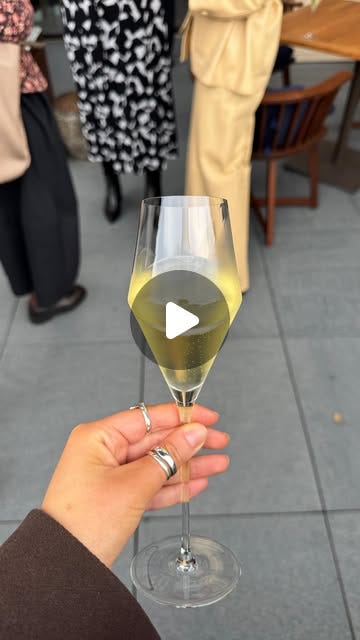
The Instagram Reel that’s lived rent-free in my head since October:
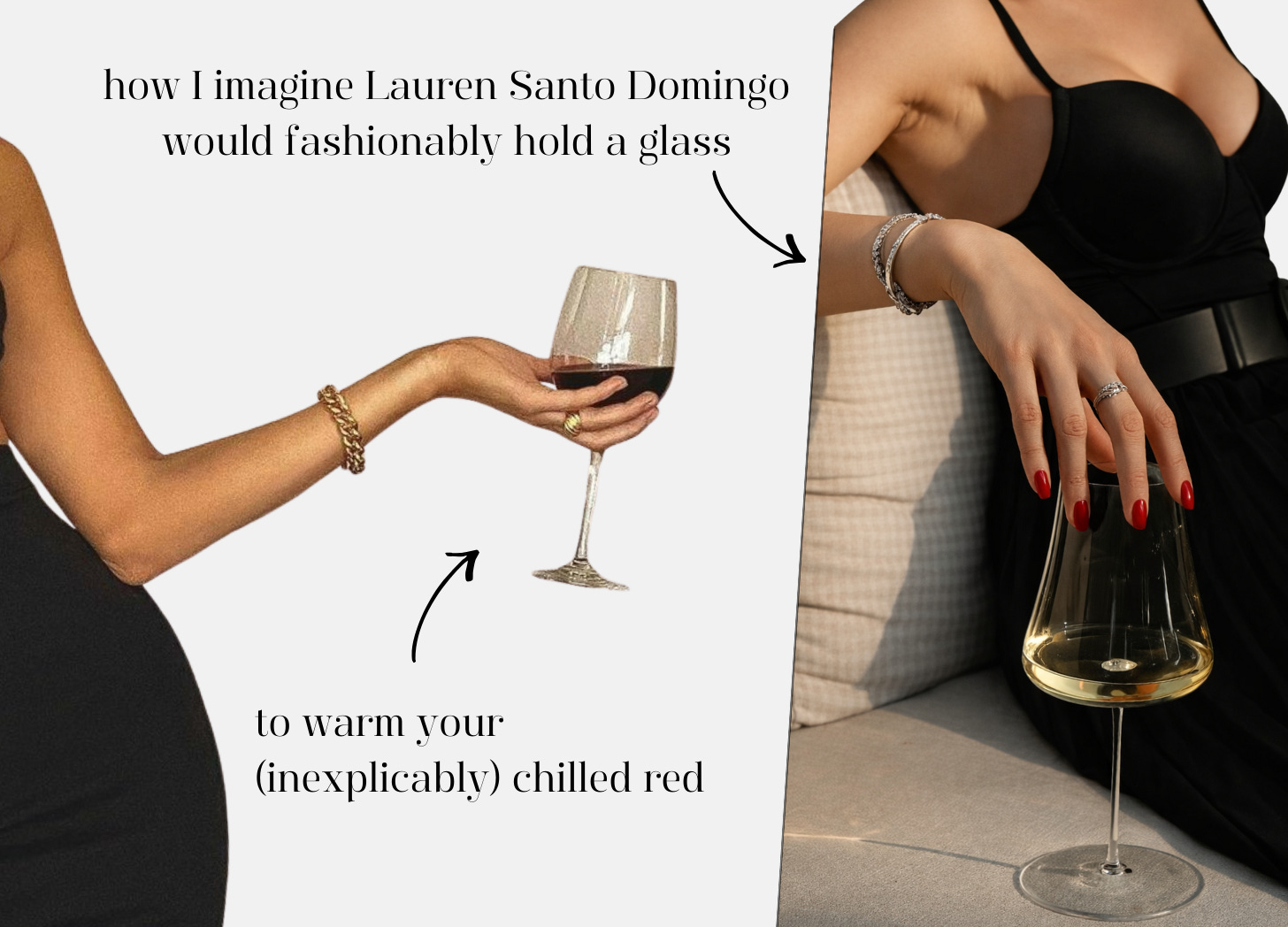
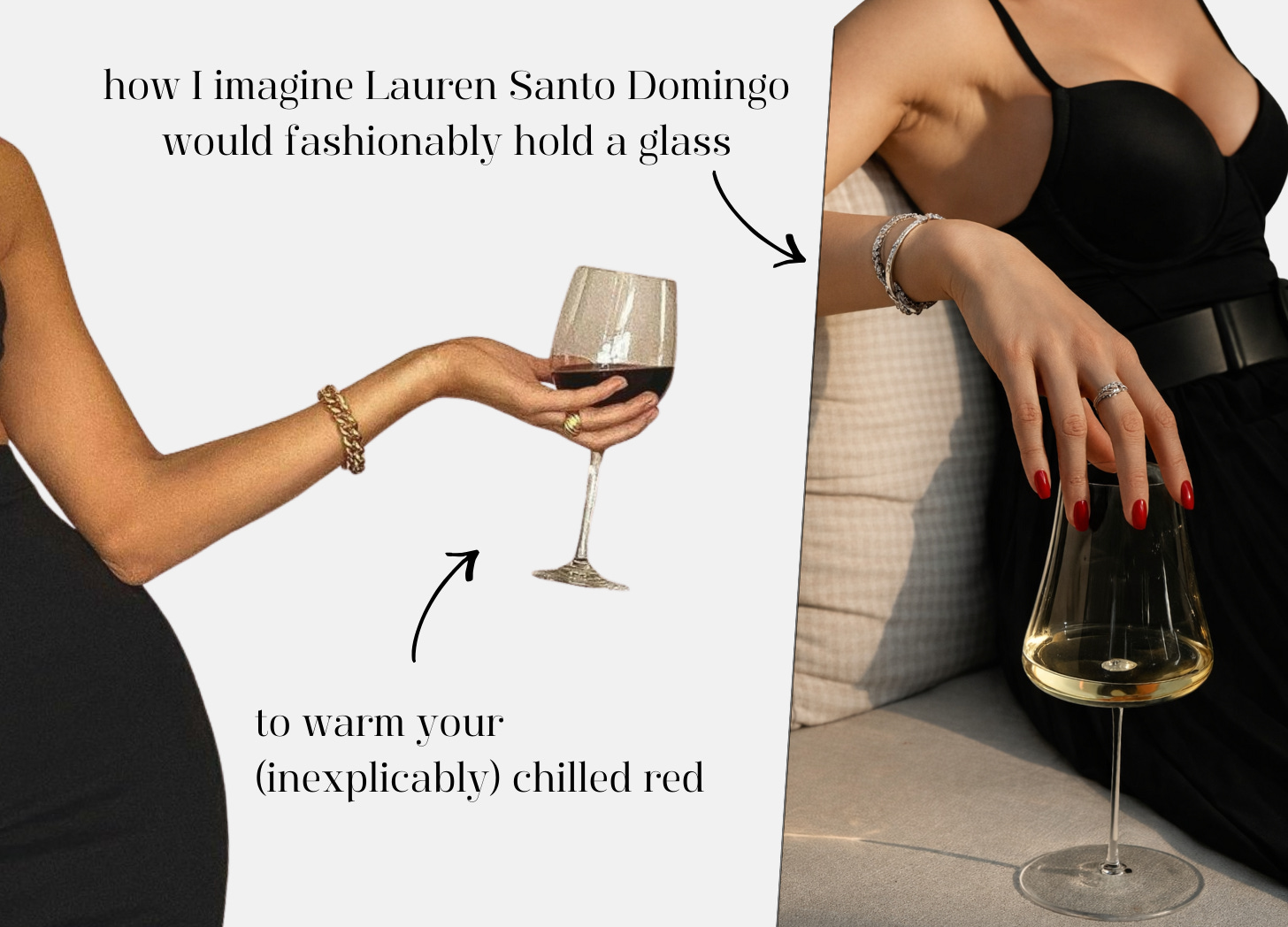
How to hold a wine glass: Over the holidays I was asked the proper way to hold a wine glass. I’ll preface this by saying you should feel free to hold your glass whichever way you’d like, but if you’re seeking to impress, read on.
Stemmed
Etiquette states you should pinch the stem of your glass between your thumb and index/middle fingers. This not only avoids warming the wine (which means if you need to warm your wine, you can hold it by the bowl) but also prevents unsightly fingerprints. If you are handing someone a glass, move your hand to either the top or bottom of the stem, to allow space for the individual to grab elsewhere on the stem. If you’re feeling extra confident, you can try pinching the foot of the glass between your thumb and thumb-side of your index finger, but we typically see this reserved for sommeliers who are educating their guests.
This all said, I do find it incredibly chic when a woman holds a glass in a more laissez-faire way, as long as greasy finger/hand prints remain at a minimum. We should also do our best to avoid an entire rim of lip marks, please.
Stemless
If you’re offered a stemless glass, switch to beer. (Kidding.)
When handed a stemless glass, I tend to lightly cup the bottom of the bowl in my palm. This allows me to seamlessly switch to gripping between my thumb and middle finger when taking a sip, while keeping any finger marks low on the glass.
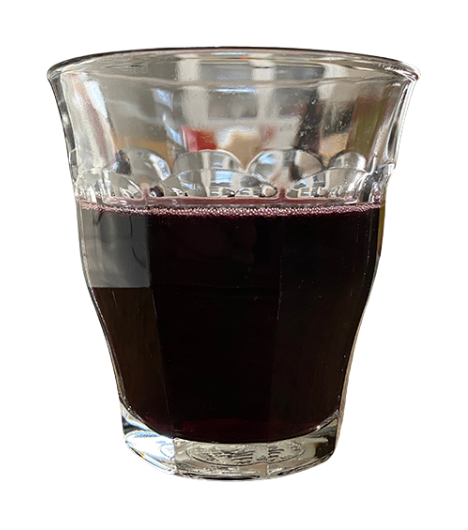
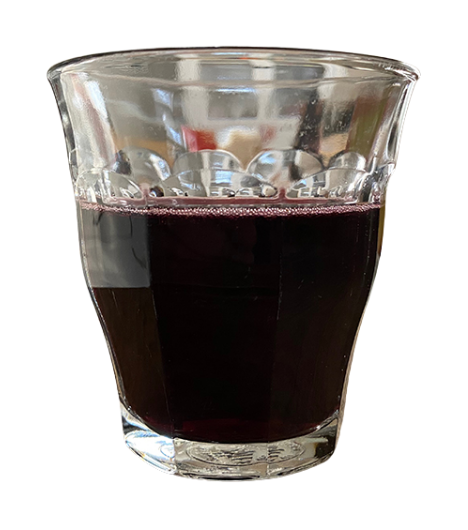
A Lambrusco-induced shame spiral: Speaking of wine glasses, I visited a newish wine bar in my city some months ago, where I ordered a Lambrusco. While each of my girlfriends’ varietals were presented in stemmed wine glasses, mine arrived in a classic tumbler-style rocks glass, à la below. I was taken aback. Assuming they’d simply run out of clean wine glasses and grabbed whatever was on hand, I (politely) requested a stemmed glass when our server returned. She kindly obliged, and upon coming back, (politely) noted that the original glass was, in fact, the traditional vessel of choice for Emilia-Romagna locals when drinking Lambrusco. This exchange still haunts me.
What I see when I close my eyes at night On French vignerons and WWII: I recently finished reading Wine and War by Donald and Petie Kladstrup, which I recommend to anyone interested in how history has shaped even the more niche corners of the world we know today. The book is filled with fascinating insights and brilliant stories, many of which I look forward to sharing with you. My key takeaway, though? World War II-era vignerons were passionate not only about protecting their wines, but about ensuring their enemies were denied the pleasure of enjoying them. They employed clever, sometimes risky, and - frankly - downright petty tactics to make that happen, and I loved every bit of it. The rebel-against-authority Aquarius in me recognizes the Aquarius in you, mes amis.