

The Rothschilds
Premier je suis. Second je fus.
Whether you’ve been drinking wine for years or are relatively new in your journey, chances are you’ve heard the name Rothschild at least once. Synonymous with Bordeaux, prestige, and quality, (not to mention: price), the Rothschilds have been a staple family in this world for over a century and a half.
I’ve personally always been fascinated by what could colloquially be referred to as this “royal family” of wine, and so I thought it might be interesting to do a deep dive into how they got their start and some of their individual influences on wine and winemaking over the last 170+ years.
Mayer Amschel Rothschild
The Rothschild dynasty is long and varied, but for our purposes the “need to know” is that in 1798, German-Jewish banker Mayer Amschel Rothschild sent his third born son to London and in 1811, sent his youngest to Paris with the aim of furthering their family’s business interests (safe to say they succeeded).
This resulted in English and French branches of the family, and from there we can skip forward to 1853 in the Pauillac [Poy-ak] region of Bordeaux 👇🏼
Baron Nathaniel de Rothschild (English branch)
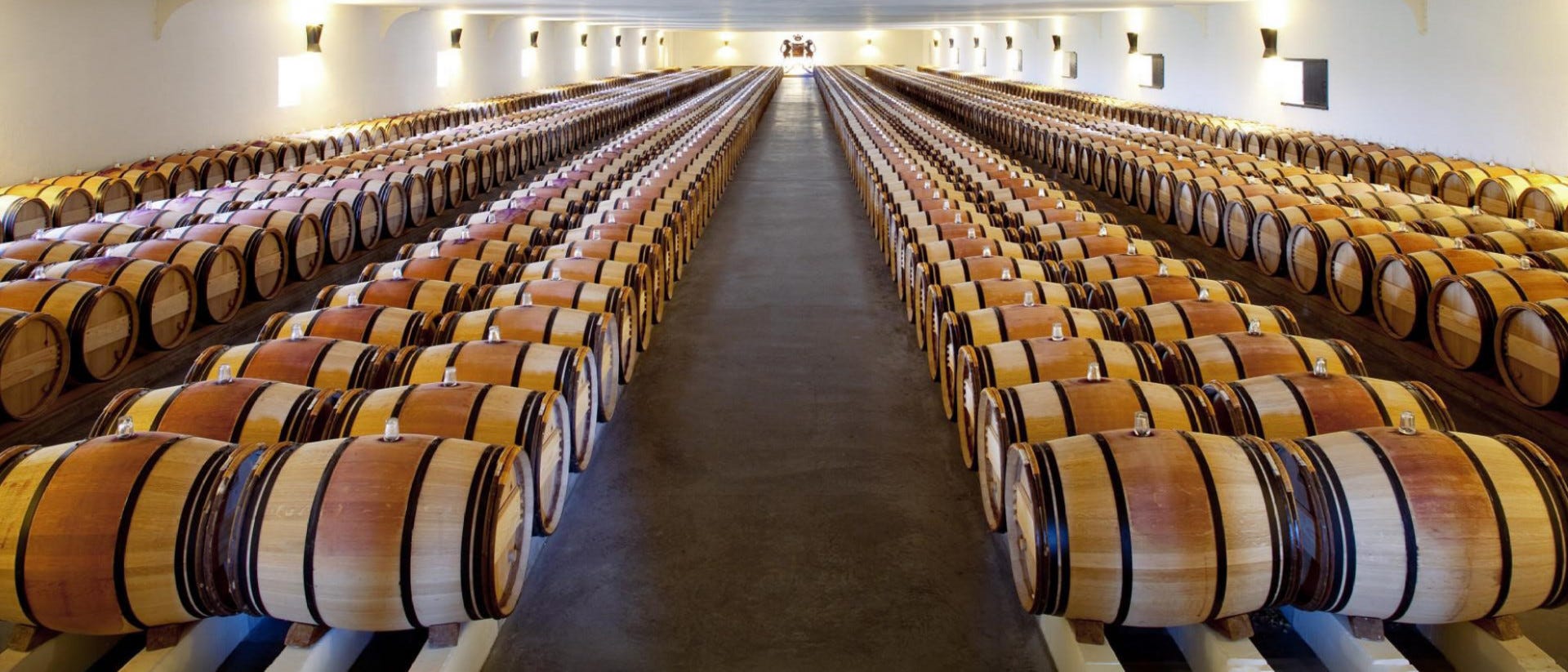
Baron Nathaniel was the first of the Rothschilds to plant a flag in Bordeaux when in 1853, he purchased Brane Mouton and renamed it to Château Mouton Rothschild (as it is still known to this day). At the time, this purchase was actually viewed as little more than a property transfer, as Brane Mouton had been previously ravaged by a mildew fungus known as Oidium.
👉🏼 In advance of the 1855 Paris Exposition and at the request of Napoleon III, the 1855 Classification of Bordeaux was established. Still the most famous wine classification in history, it included five classes (First, Second, Third, Fourth, and Fifth Growths) consisting of 58 Châteaux.
The 1855 classification placed Mouton Rothschild at the top of the second growths, and it was largely believed that the winery was excluded from First Growth because Nathaniel was an Englishman and thus the winery was not under French ownership.
Baron James de Rothschild (French branch)
In 1868, Baron James de Rothschild followed Nathaniel’s lead when he purchased Château Lafite [la-feet], an original 1855 First Growth next door to Château Mouton.
Château Lafite has been a consistent producer of the world's most expensive and quality red wines, despite operating through the Great French Wine Blight in 1869 when phylloxera aphids destroyed 100,000 of Bordeaux’s 170,000 hectares of crops, and two world wars (the second of which saw the Château occupied by the German army and suffered significant plundering).
👉🏼 In 2010, an 1869 Château Lafite Rothschild sold for US$233,973 and is the world record holder for the most expensive bottle of wine ever sold at auction.
Château Lafite is also one of the most counterfeited wines around the world thanks to its price and prominence. In November 2012, police in Wenzhou, China seized nearly 10,000 bottles of suspected counterfeit Lafite Rothschild and it is suspected that between 50-70 per cent of bottles labeled Château Lafite Rothschild in China are fake. (Fun fact: if genuine, it was reported that the 10,000 bottles would have been worth approximately US$16 million at the time of seizure.)
Baron Edmond de Rothschild (French branch)
James’ son, Baron Edmond took control of Château Lafite shortly after it was acquired by the family.
Edmond was instrumental in the establishment of the Israeli wine industry, after he made a significant donation in 1882 to kick-start the country’s first two wineries.
Baron Philippe de Rothschild (English branch)
I could probably write an entire article about Baron Philippe de Rothschild (great grandson of Nathaniel) and his impact on Mouton Rothschild, the Bordeaux region, and the international wine community. In summary however, he (during his 65-year tenure at the helm of Château Mouton Rothschild) oversaw several major developments, including:
Introducing one of the world’s first branded wines (Mouton Cadet [ka-day]) when he was just 28 years old,
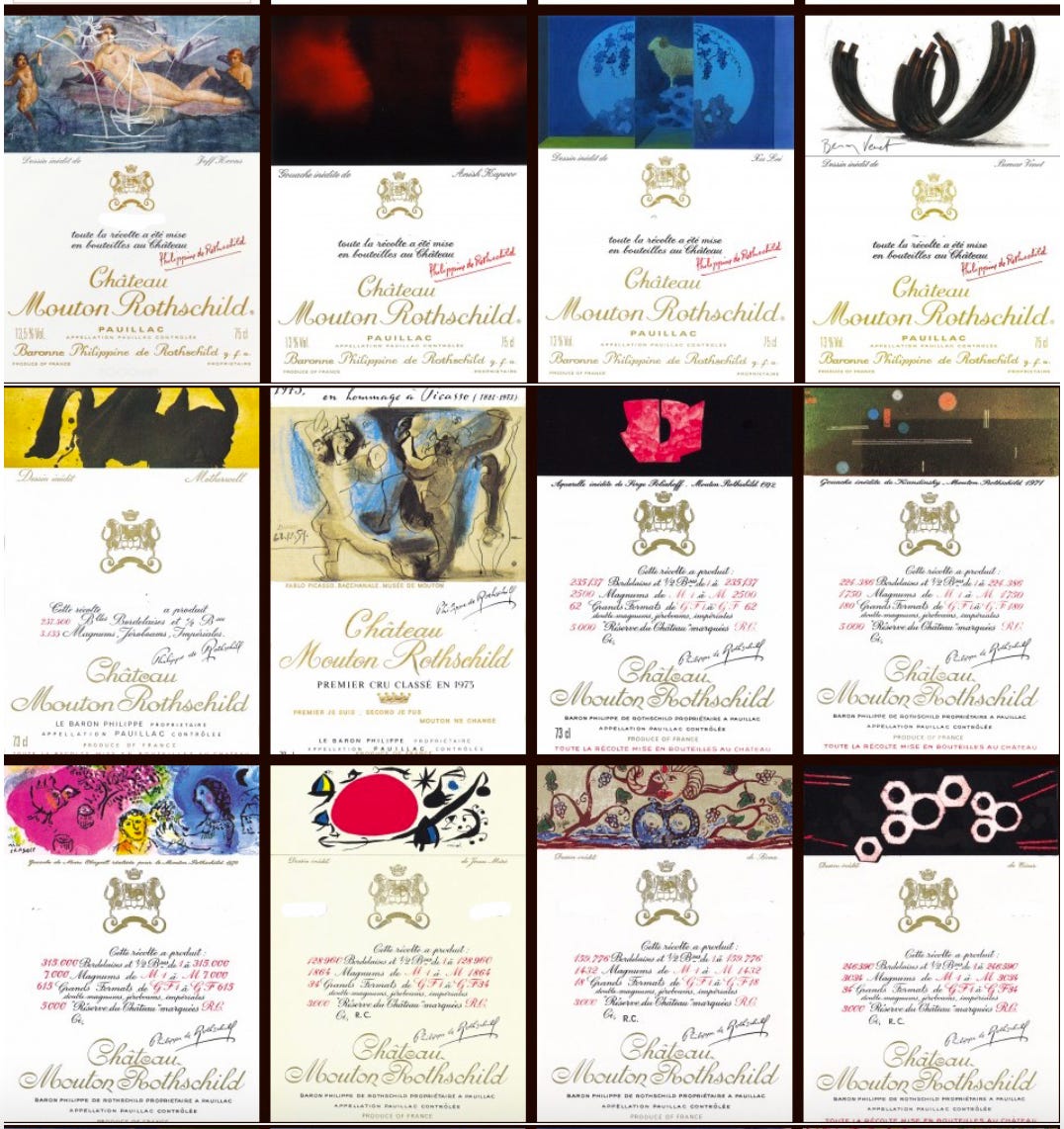
Developing the concept and value of branding a wine, with the creation of artists’ labels (Salvador Dalí, Picasso, Chagall, and even Prince Charles are among some of the names who have designed labels for Mouton),
Acquiring two neighbouring fifth growth châteaux: Château Mouton d’Armailhacq (now d’Armailhac) in 1933 and Clerc Milon in 1970,
Building one of the finest wine-related art collections in the world,
Becoming the only person in the history of the 1855 Classification to successfully petition a classification (after 50 years of advocacy, Château Mouton was amended from Second Growth to First in 1973), and
Launching the world’s first high-profile joint wine venture in 1979 with the establishment of Opus One alongside California winemaker Robert Mondavi.
Baron Éric de Rothschild (French branch)
Between 1974-2018, Baron Éric oversaw various expansions of the Rothschild’s Lafite portfolio through:
Acquiring the leading property in Sauternes, Château Rieussec, as well as Château Paradis Casseuil in 1984,
Purchasing L’Évangile in the Pomerol region of Bordeaux in 1990, and
Establishing joint ventures in Chile (Viña Los Vascos), Languedoc (Domaine d’Aussières), Argentina (Bodegas CARO), and China (Long Dai).
Saskia de Rothschild (French branch)
In 2021 and at the age of 34, Saskia de Rothschild (daughter of Éric) became CEO of Lafite (also known as Domaines Barons de Rothschild, or DBR). She was named chairwoman of DBR in 2018 at age 31.
Under Saskia, all estates under the Lafite name have begun to work toward organic certification.
Baron Benjamin de Rothschild (French branch)
In more recent years, a separate branch of the French Rothschilds (known as “the other Rothschilds of wine”) has had lesser-known but still notable impacts on the wine industry around the world, under Baron Benjamin de Rothschild. These include:
Establishing a joint venture with South African winemaker Anton Rupert in 1998, called Rupert & Rothschild,
Launching another joint venture in 2002 with Laurent Dassault in Argentina (Le Clos de los Siete),
Purchasing Château des Laurets in Saint‑Emilion, Bourdeaux in 2003,
Launching Champagne Barons de Rothschild with Éric de Rothschild and Baroness Philippine de Rothschild
Starting a joint venture in Spain with Spanish winery Vega Sicilia in 2009,
Launching New Zealand joint venture Rimapere wine in 2013, and
Adding a second New Zealand winery, Akarua, in 2021.
Benjamin was also the largest stakeholder in Château Lafite Rothschild.
The last word
Baron Philippe de Rothschild SA manages three classified growths in the Pauillac appellation of Bordeaux, and produces and sells a range of branded wine, including: Château Mouton Rothschild, Château Clerc Milon, Château d’Armailhac, Domaine de Baronarques, Mouton Cadet, Escudo Rojo, and Anderra.
The Domaines Barons de Rothschild (DBR) Lafite family of wine estates includes: Château Lafite Rothschild, Château Duhart-Milon, Rieussec, Château Paradis Casseuil, Château L’Évangile, Domaine d’Aussières, Viña Los Vascos, Bodegas CARO, Domaine de Long Dai, and Domaine William Fèvre.
Suffice to say, the illustrious Rothschild family has had a tremendous impact not only in the production of exceptional quality wines, but in shaping the very essence of winemaking itself.
From Barons Nathaniel and James to Saskia and Baron Benjamin, each generation has had the prowess and foresight to add unique and invaluable chapters not only to their family legacy, but to the history of wine and winemaking (particularly in Bordeaux).
So join me in saying ‘cheers’ to the Rothschilds, whose name has inspired tradition, excellence, and ingenuity in oenophiles around the globe for 170 years.