

When science meets art
Syrah, Shiraz, and the story of Penfolds "Bin 1"
Anyone who knows me has likely heard me say that I find wine so intriguing because it’s a rare and beautiful marriage of science and art.
On one hand, there’s the science: the discipline of process, the chemistry of fermentation, the biology of the vine. These quantifiable pieces are required to transform a fruit into something safe and drinkable.
On the other hand, there is artistry: the subjective decisions that elevate the base product into something beautiful and expressive.
Choices like employing restraint, having the audacity, listening to instinct, and believing that what’s in our glass can be something more simply because we want it to be. These are the human choices, unique to each winemaker, that allow wine to be not just a beverage, but something we can fall in love with.
Syrah, or Shiraz, may be one of the best examples of a grape that embodies this delicate balance between two seemingly opposed disciplines.
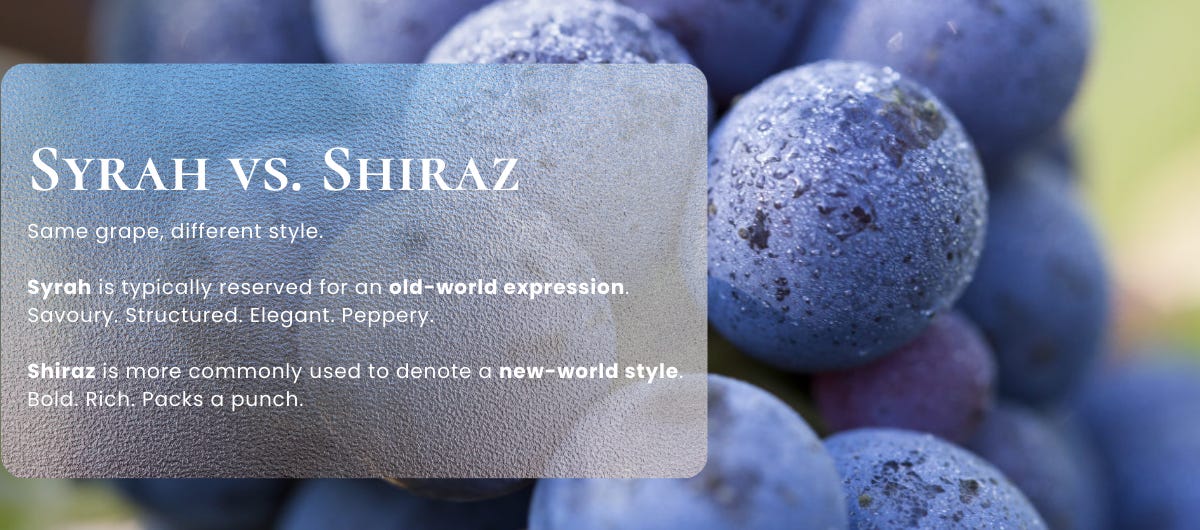
Syrah, most associated with France’s Rhône Valley, is elegant, with refined structure and savoury, peppery, and even violet notes. By contrast, Australian Shiraz has historically packed a more powerful punch with ripe black fruit, fuller body, and warmth. And of course, this variety has been known to live anywhere along the spectrum between these two poles.
This grape can also stand confidently on its own, or serve as a meaningful blending partner with Cabernet Sauvignon, Grenache, and Mourvèdre.
But perhaps one of my favourite science-versus-art sagas involves Syrah, an Australian winemaker, and a rebellious act of defiance…
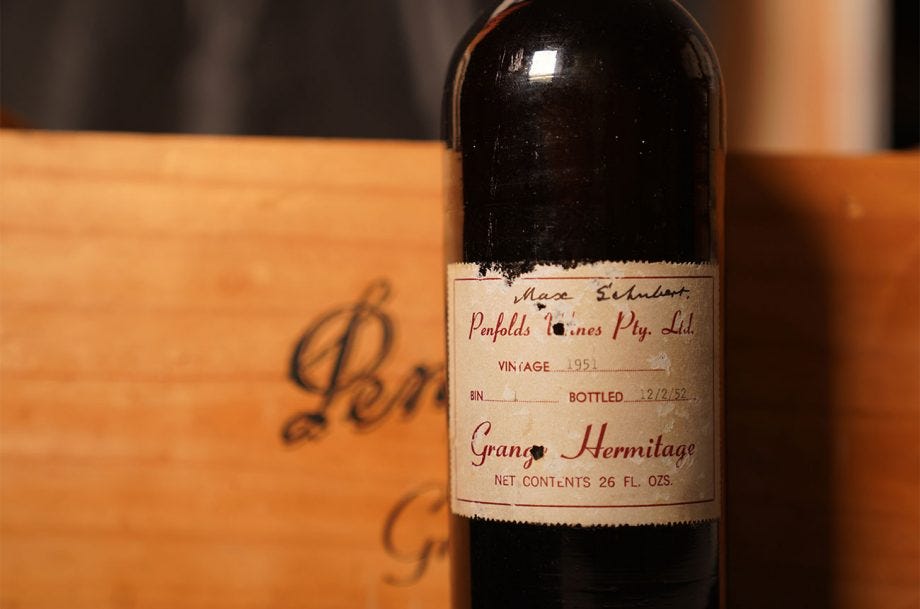
Penfolds 1951 “Bin 1” Grange Hermitage
So basically, a young Australian winemaker named Max Schubert travelled to Bordeaux in 1950, where he fell in love with their wines built around structure, restraint, and ability to age for decades. At the time, most Australian wines - including those he was producing at Penfolds - weren’t crafted for longevity. They were styled as approachable and meant for early consumption. Instant gratification, if you will.
Schubert returned home to Penfolds with conviction: Australia was also capable of crafting wines with depth and longevity, that could stand alongside France’s more respected bottles.
Thus, in 1951, he produced his first experimental vintage. Labelled “Bin 1” - named simply after the cellar bin in which it was stored - was unlike any other Shiraz the winery had released. It was structured, deliberate, and matured in oak - intended to reward patience and evolution.
Management did not share Schubert’s enthusiasm for Bin 1, and in 1957 ordered him to stop his experiments (in fact, I think he was even removed as head winemaker for a time). There was no room for artistry.
Schubert disagreed.
For the next three vintages, he continued his Bin 1 production in secrecy, hiding the barrels deep within Penfolds’ broader inventory. Only a small number of the 1951 bottles survived, and it wasn’t until years later that Schubert’s patience and conviction were finally rewarded.
“Bin 1”, now known as “Grange”, had softened into something beautiful, layered, and complex. What had once been dismissed as too aggressive for the consumer - and even a fireable offence - had revealed itself to be something visionary and worth celebrating.
I love the story of Schubert and Bin 1 because it reminds us that while science defines what is achievable, artistry - and conviction - grant us the space to push beyond perceived limits.
Syrah - or Shiraz - is a grape shaped as much by chemistry as it is by vision. The name on the bottle signals the intention; it tells a story behind the winemaker’s philosophy before the first glass is poured.
Syrah. Shiraz. Same grape. Different intentions. And as with most things, in the end it’s intention that makes all the difference.
Wow so interesting!
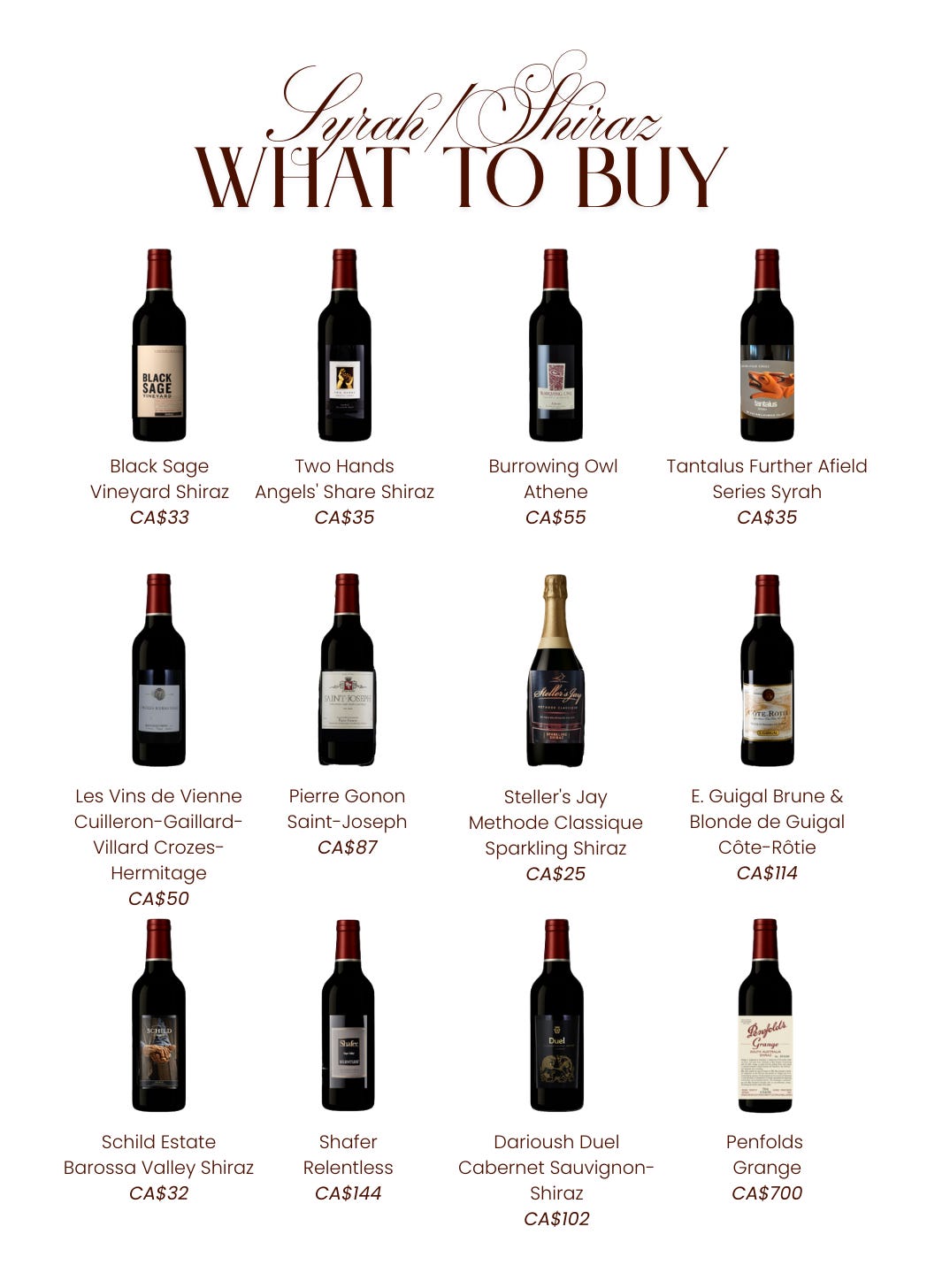
Great article! Thanks for sharing bottles to buy!